Interview with Jessica N. Maxwell
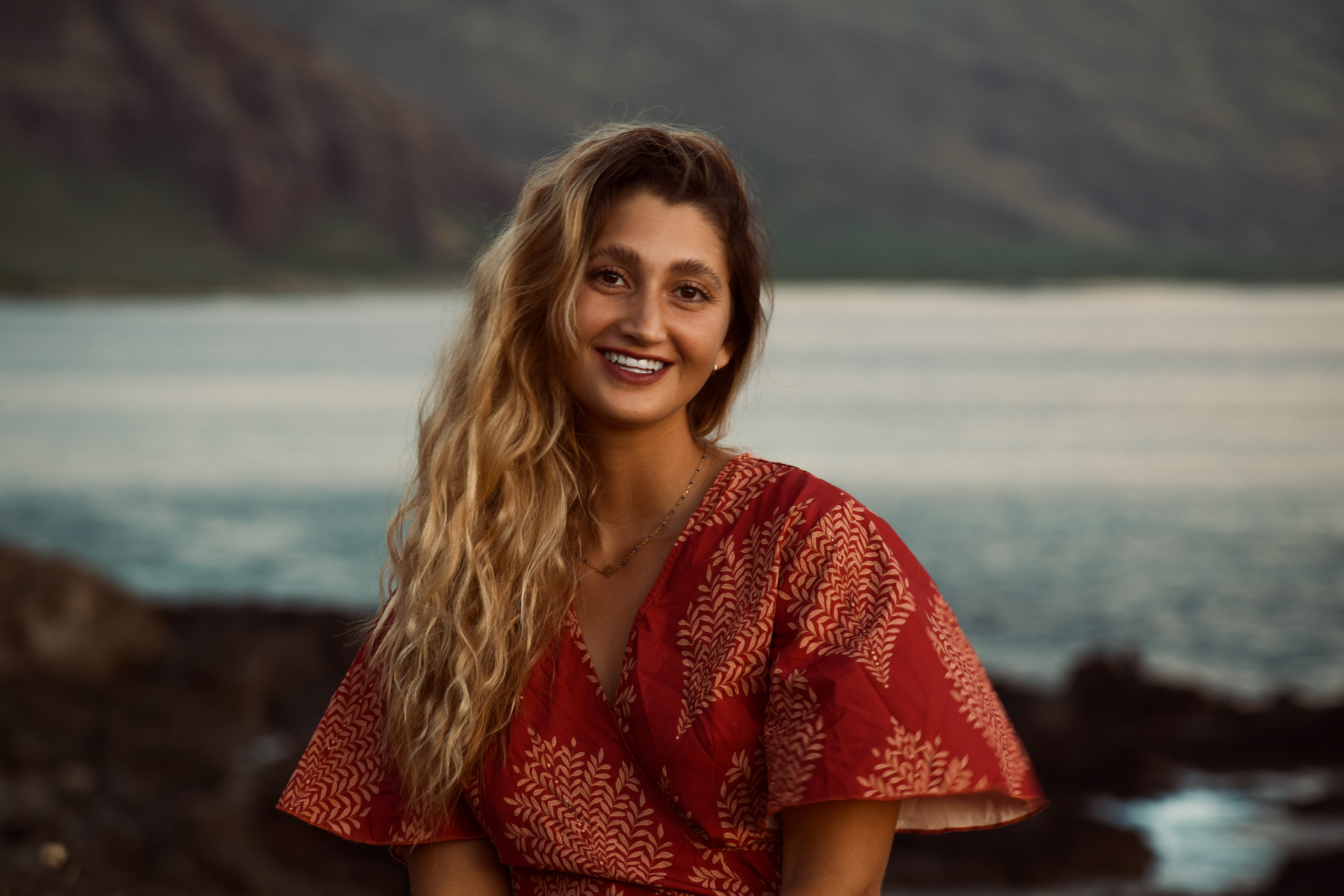
Originally from New Jersey, Jessica N. Maxwell is a photographer and filmmaker now based in Los Angeles. Her journey into photography began at 16 in vocational school studying darkroom photography and visual communications, but her true calling came at age 12 when Steve McCurry's Afghan Girl inspired her to create safe spaces where people can tell their stories. Her work is shaped by extensive travels including Sri Lanka and Hawaii, capturing themes of community, slowness, and intentionality. When she's not behind the camera, you'll find her longboarding to the basketball court, surfing, or experimenting with new recipes in the kitchen.
Transcript
Even Rene
Hello, everyone. My name is Evan Renee, and I am the host of the Collective. Film is a collaborative medium, and at United Studio Collective, we want to highlight artists that we believe in. I'm really interested in the process of creating art, what the artist's headspace was when they created the piece, and the journey from inception to product. On today's episode, we have the pleasure of interviewing Jessica Maxwell. She's an amazing friend and extremely talented photographer and filmmaker. I hope you can enjoy hearing about the process and getting to know a little bit about her as much as I did. This interview was filmed on July 11, 2025.
Jessica N Maxwell
I'm super excited to be here. Thank you for. It's an honor to be here. Thank you for asking me.
Even Rene
This is the first time that we're doing this. So, you know, Jess and I have. Have been kind of workshopping through the whole process. So, you know, we'll see how this works out and how. And what sticks. And as we, you know, have. As there's further episodes, we'll see if the format changes and whatnot. But thank you for your patience. And, yeah, we'll dive into the questions that we have for today. How did you get into photography and what do you find interesting about it?
Jessica N Maxwell
Yeah, so this question is always so interesting to receive and be with, like, how I answer it every single time I'm. I'm asked the question, and I guess my answers are always a little bit different. So. Yeah, when I was about 16, I had the opportunity to go to vocational school, and I had the. I was always kind of passionate about, like, cooking, but, like, I didn't really know that at the time. Like, I didn't really pick it up. I didn't really pick up that until I was older, that realization. And, yeah, so I remember, like, being a kid and, like, you know, cooking a little bit. And then. So when I was given the opportunity to go to vocational school, I was like, okay, do I go to culinary school? Do I go to design, visual communications, or. I think there was a third one in there, but I. I don't remember what it is. And, yeah, so I was just. I followed the. The thread of going with the design of visual communications, which led me into doing, like, darkroom photography, screen printing. I don't think there was a. I don't think there was video in there at the time, but, yeah, graphic design and things like that. So I really fell in love with photography. And there is actually a lot that I don't remember as much as a kid, but something I do remember Is when I was about 12 years old, I was standing in my room, and I just remember feeling the weight of the world. And I felt pretty alone in that moment. And I don't know where it came from, but I remember having a National Geographic magazine cover in my hands, and it was Steve McCurry's Afghan Girl. It's from 1985. And I just remember feeling like that, seeing that just really. It spoke to me in ways that are beyond words. The reverberation of it just, like, fell into my cells. And I just remember feeling like when I get through this thing, this loneliness, this whatever I was moving through at the time, I want to create safe spaces in the world where people get to tell their story and really feel like it's just a safe space to be able to articulate and to be held and be seen and be heard.
Even Rene
Yeah. So I'm going to go share my screen now, and we are going to take a look at one of your photographs.
Jessica N Maxwell
So that photograph was taken back in 2018. At the time, I was on a kind of like a. It was a mental health program where we got to go and connect with people in psychiatric wards and teach English. And so we were all like. It was all different people from all. All over the world, and we all went to Sri Lanka. So let me first start by saying that this photograph was taken in Sri Lanka.
Even Rene
You know, I. I was like, I don't think it's the US but let me. I'll wait till she. You know what she tells me?
Jessica N Maxwell
I'll get there eventually. Right? Yeah. So that photograph was taken in Sri Lanka in 2018. Essentially, it was an opportunity to go and mirror psychiatrists and work with people in psychiatric wards and teach the community kids English. And so we were living in locally in people's homes. And so on the weekends, we were encouraged to travel because that was the time for the people who were hosting us to have their family time and have their privacy and stuff. So this, I believe, was taken in the tea plantations. And from what, like, what it was like to be on the outside of the mountains was like, oh, it's very beautiful there. Like, it's very. It's very sunny down here and everything. And then we got into the mountain area where all of these tea plantations are. It was so cinematic to me to be experiencing, like, these really, really strong and powerful women out for hours just picking this tea.
Even Rene
Yeah, it's truly amazing to see. And this was their. Their daily routine. And I love how in the photo we get to see Kind of those grains of. This is fog or is it mist? Yeah, you get to see that, but you. You see this sharp silhouette of her and the detail on. On her shirt or her jacket that she's wearing, and the detail in the bag and the. The lining that's within that bag that she's collecting the tea leaves with. Um, I think that's. It's really great. Do you remember what focal length you took this on, what camera you used? And was this originally shot in black and white, or is that a decision that you made in post?
Jessica N Maxwell
Yeah, so I don't remember the focal length, but I do remember this was shot with a Sony. Sony, a 6300. And it was a decision that I made in post to make it black and white. Lightroom is such a cool place for me to be able to play with images that I get. And this just happened to be one of those images where I loved the serenity of the back. It just looks like you're in this mysterious world. I really appreciated the way that the weather up there was just so radically different than when you were off of the mountain. And it just created this space for. For play in this image, because not being able to see her face, I can. It gives me a sense of. Even though I was there, it gives me a sense of, like, that it could be a woman, it could be a man. It doesn't matter. That, like, there's this unity with the woman that, like the. The person, the human and the land and the. All of the things, all of the elements, all in one space in one area. Yeah, that's what I love about the black and white. Because when it's in color, like, you can see. You could see the differences in the. In the greens and the trees. And then you can see in the back, it's kind of like this creamy, foggy color. And then you could see, you know, the colors in. In her skin and her outfit and her bag, and it's just in black and white. It's kind of like all of those things kind of fade out. And it's. It's just this really compelling image, I think.
Even Rene
Yeah, I love the way how you articulated that. And you were able to find that justification, you know, in the post process. And it shows the intentionality behind the photo. Because I think a lot of times, sometimes artists or just culture nowadays, we have a photo and you're playing around with it, maybe you're adjusting the saturation or some other parts of the photo, and then you just, like, press the black and White button by accident or you intentionally press it. You're like, oh, dude, this looks amazing. I want this photo in black and white. And sometimes it kind of happens just because. But, you know, being able to hear your story of why you chose to have this photo in black and white is super interesting and shows the intentionality and the slowness of what you're talking about earlier. Reading this map, this photography magazine, when you were 12, was something that really kind of shaped your life and your perspective about photography. And in outside conversations, you have mentioned to me that you have this dream of starting a magazine. Can you elaborate on that? I think that's. That's such a huge. Yeah, that's. That's a really big thing. And. And I'd love to know more about that.
Jessica N Maxwell
Yeah, definitely. Yeah. So When I was 18 years old, my ex fiance, he was a surfer and he was just always in the water. And. And that's actually where I really got inspired in my photography, like, being more consistent with my photography and having, like, a theme in which I was, like, super passionate about. And so I would. I would always photograph him from the sand, wishing that I was in the water and wanting to get more into that, like, that feeling that. That, like, easefulness and excitement and joy that surfers tend to emanate and, like, this chillness as well. And so it was through that period, like, for those, like, two, almost two years, where I really enjoyed just, like, witnessing and being a part of the surf community. And so just getting some images of the waves and the water and the way that they just, like, they dance and is fascinating to me. And so I would always see, you know, sometimes he would get these magazines in the mail, like Surfer magazine, Stab magazine. And so back then, like, I would create these crazy colors from the. From the wave that looked. That was absolutely not reality, but just the way that I was experiencing, like, the joy in being able to capture these images. And I took some images that, That I believe are, you know, the ones that I would want to put on a. On a front of a magazine. And I was playing in Canva, and I made this, like, I would just keep, like, pulling the images into the thing and then not changing the title of it and everything. And I would just write. Write a little, like, synopsis of the photo. And so I have, like, 20 or so, like, playful magazine images and covers of what I would want to create. And yeah, it's just.
Even Rene
I'm just piecing everything together from our whole conversation of just all of the ways that you are inspired and how you approach photography. And I can see that. I mean, it's. It's a dream. And, you know, we're in this process right now of, you know, taking the dream and turning it into reality. So it'll be super interesting to check back in within, you know, a couple months, a few years, and just see where everything is switching gears again. Talking about photographs that could be in a magazine, we're looking at a surfing photo. Okay, Jess, set the scene for me. What's the story behind this photo?
Jessica N Maxwell
Yeah, so I took that photo the first time that I spent six months in Hawaii, in Oahu, and this is actually in Waikiki. And I believe I shot this. I've shot this also with a Sony. I've been a canon person now for. I was a canon person when I started, and then I was a Sony person for about, like, four or five years, and now I'm a canon person again. I was living in Hawaii for what was supposed to be just two months, and then it ended up being six. And this is at the end of the. In Waikiki. It's. It's just wild down there where it's always filled with people. And, you know, I. I got to sort of just be present with seeing the sun come down through these trees and just seeing the community. Like, I know that there's, like, a bunch of different people who go to surf at these. At these beaches, people who are experienced, people who are not experienced, people who, you know, are just on vacation and people who are local. And what I love about this image is that, like, it just allows. It just. It reminds me of community, and it reminds me of, like, you know, it's called the Last Supper because, you know, people are just out trying to get waves all the time. And this is your. You know, this is kind of your last few moments with the sun here. That's how I was feeling when I was taking this photograph. It was kind of like this. This easefulness into the nighttime.
Even Rene
The framing that's here, you know, you have the. The sun coming down right above the horizon line. It's right in between the palm trees. You have some of the people, the surfers, right in that nice little framing as well. And then you have some over to the side. Everything is really crisp. The detail of the colors that's on the water, it really feels like you are there in that. In that image. What made you set up the specific framing in between the palm trees?
Jessica N Maxwell
I felt it gave more of a. A dynamic to the photo. It kind of also. It Kind of also, like, aligns with the rule of thirds a little bit in which I. I totally respect and I love, but I love kind of like breaking that rule sometimes. And, yeah, it was kind of just like, in the moment, I felt like it could really add a little bit more depth to what you were seeing instead of just like, having the horizon, the surfers, the sun, the sky, but the element of the palm trees and just how, you know, it's kind of like, for me, it. It allows you to really just tune in and zoom into where you're at and kind of gives a sense of stillness.
Even Rene
To me, this photograph does a really great job of capturing exactly what's in the moment and what it feels like to. How you said, you know, this is the last supper. This is. These are the last few waves before the sun inevitably goes below the horizon and the moon comes up. As we kind of wind down here, there's one final question that I have, and I know we kind of talked about some other hobbies and just fun things that you enjoy doing outside of photography. You know, you mentioned at least twice a year you do some surfing and then that you enjoy longboarding. But other than those or those things, what are some. What are some fun hobbies or things that you like?
Jessica N Maxwell
Yeah, so whenever I'm asked this question, it's so funny because, you know, we. We talked about a little bit of these questions before, so I got a chance to, like, think about it. But whenever I've asked these questions, I'm like, what do I do for fun again?
Even Rene
Yeah, right. I know. It's like fud. What's that?
Jessica N Maxwell
Yeah, yeah. So, yeah, like, I love longboarding, playing basketball. I used to play basketball in high school, so it's just nice to be able to bring that back into my adult life now. Um, and a lot of the time, what I'll do these days is just like, longboard around the corner to a park and just play basketball.
Even Rene
Okay.
Jessica N Maxwell
So it's like the. A nice.
Even Rene
Do it. You're doing both. You got the longboard and the basketball at hand. Exactly like it.
Jessica N Maxwell
Besides those two things, I love hiking in new places. I love doing yoga. And one last thing that I love, Absolutely love is. Is playing around with nutrition and cooking.
Even Rene
And, like, you know, it's funny that you said that, because I was gonna say when she said one more thing that I love, and I was like, if she doesn't say anything about cooking, I'm gonna have to say something about it.
Jessica N Maxwell
Yeah, that's huge for me. I'm just I spend the majority of my time in the kitchen. If I'm not, like, hanging out outside at a coffee shop, working, doing stuff, I spend a lot of my time in the kitchen. And I just love, like. Oh, just. Yeah. Bringing in this element to food as a foundation for, like, you know, the nutrition that we bring into our lives is, like. It not only is nourishment about the food that we intake, but of course, it's also, you know, the media that we take in and everything outside of, you know, nutrition. And so I find that to be really a core foundation of what's helped me change a lot of the things in my life and has definitely changed the trajectory of my life.
Even Rene
Yeah, that's. That's great. I was about to ask so you know how I met Jessica. We actually met each other at church, and at the time I was building a film studio space, which I guess I'm still building, but yeah. So, you know, I met her and I kind of showed her the space and figured out that she was in to photography and film. And just. I think that's all I knew at first, but being able to. As I've gotten to know you more, I wanted to ask, like, are you feeling like this place, living in Los Angeles, you know, feels like home to you?
Jessica N Maxwell
Yeah, I really do feel that way. And it's. It's so huge for me because when I used to live in New Jersey, that's originally where I'm from, I was traveling a lot. And so when I would ever come back home to New Jersey, it was always amazing to come back to my mom and hang out with her. And, you know, there's this. This. This thing kind of tugging at me that I. I didn't really feel like I had community where I was living in New Jersey and I grew up there. I ended up living in a place that was like, about an hour away for the last years that I was there before moving here. And so community has been such a pillar in my life and something that I craved more of before I moved here. And having communities in different areas of the world was always beautiful, but I just really wanted to hone in and kind of find a community for myself that was tangible, that I could actually be a part of and really feel a part of. And meeting you at church, and you're my first friend at church as well. And so, like, you know that church in particular, Inside out, is just such a beautiful place and intimate and, you know, everybody knows everybody, and it's just so. It's so beautiful. And so that's actually where Community really started for me here in la. And since then, I've just felt so at home. And everybody that goes there is just such a. Yeah, so a big part of my life.
Even Rene
Yeah, that's. That's really cool to hear. And. No, it just. It just makes me happy. And, like, some of that I knew, but I didn't know all of the other stuff. So as we just kind of wrap up everything, I loved hearing just. Just all of your answers to these questions and taking the time to really just answer them in depth, and all of it all makes sense. You know, you put the puzzle pieces together of who Jessica Maxwell is as an artist, and you see all these common themes of, you know, slowness, intentionality, you know, trying to not just capture that vision that's in your head, but capture the vision that you have in your heart and tell that story through, you know, whatever median medium you're looking at. And it's. It makes me reflect on myself as an artist and, you know, I'm glad that we can work on projects together and. Yeah. That we're friends and whatnot. So it's. It's cool. So, you know, thanks for. For taking the time and doing this interview.
Jessica N Maxwell
Yeah, thank you so much for how you so beautifully reflected back, you know, how you received and how you were listening to, you know, all of the answers that. To the beautiful questions that you asked me. And it's been such an honor to be here and to show up and. Yeah, it's been beautiful getting to know you as an artist and also getting to know you as a friend and. Yeah, even in this space. How new this is for both of us, right? So, yeah, thank you for having me here. It's been really, really sweet.
Even Rene
Thanks, everyone, for tuning in, and we'll see you in two months or so with another guest.