Interview with Justus Martin
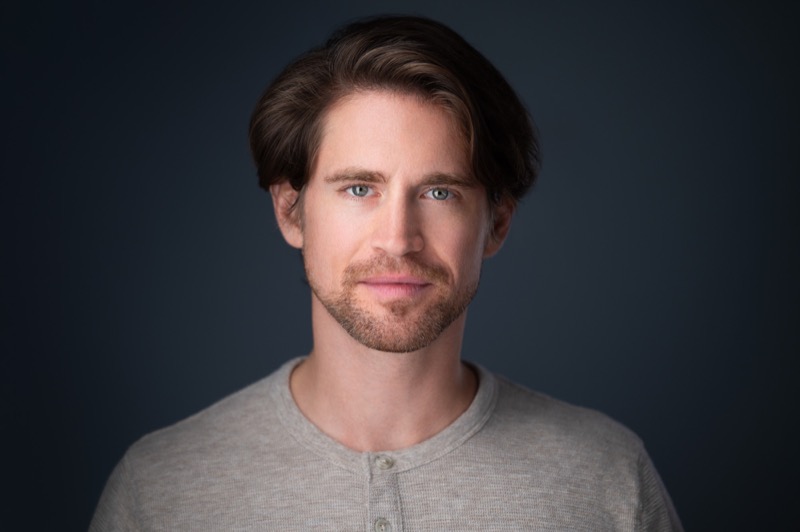
Native to Miami, Florida, Justus Martin was fascinated by his father's camera and gear, but only started dabbling in photography in early high school. Initial interest momentarily wavered between photography and aspiring to be a videographer for skateboard videos, but photography dominated the competition. Years elapsed without serious shooting but eventually fueled by adolescent angst of a breakup, he started shooting again while in college. Finding some success in creating interesting images, he decided to regularly practice. Justus now views his craft as storytelling typically in a realistic and yet aesthetic manner. Outside of photography, he loves the outdoors, freediving, and learning about ways to be healthy.
Transcript
Even Rene
Hello, everyone. My name is Evan Rene, and I am the host of the Collective. Film is a collaborative medium, and at United Studio Collective, we want to highlight artists that we believe in. I'm really interested in the process of creating art, what the artist's headspace was when they created the piece, and the journey from inception to product. On today's episode, I'm really, really excited to have the pleasure of interviewing Justus Martin. Justus and I have been friends for over a decade, and I've been able to experience his creativity and process in person. His photographs, in my mind, have always been a standard to achieve. The way he tells stories through his images is truly inspiring. I hope that you can enjoy hearing about Justus's process and experiencing his images. This interview was recorded on August 28, 2025. We'll jump into the questions and then we'll get a deep dive on some of your photographs. Can you just tell me about how you got into photography?
Justus Martin
Yeah, that question would take me all the way back to some of my earliest memories. I remember being a baby, and I don't know how old I was, but I had to have been like a toddler or very young. My parents created a flip book for me, and it was things that they had clipped out and just stuff for me to look at. So one of the things in this, you know, essentially photo album with the sticky page and the laminate that you would put over, was this computer-generated diagram of an SLR lens. It's interesting because I still remember seeing that. My dad worked at a television station and he had a darkroom, and I never really got my hands at that too much. But then in high school I was getting ready to go on a trip out of the country and my dad asked. We were at a resort kind of on vacation, and it was just the two of us in this hot tub one night at this resort. And he's like, oh, do you want a camera to take or something along those lines? I'm like, that sounds cool, but I don't know anything about cameras. And so he just sat down and there in the hot tub, he explained the process of how the camera works, and the shutter speed, aperture, and ISO and the lens. And I think he even got into compression of like bokeh and zooming in and whatnot. But anyways, my parents got me this camera. I had just turned 15 and I took this thing and shot, I don't know, maybe 13 rolls of film over the course of the summer in Ethiopia. And I got some good images from it. The film camera, yeah, I mean, I was a high school kid at that point without a real job. And buying film was not cheap, and nothing's cheap when you don't have that much money. So buying and developing the film was kind of a prohibition to shoot a ton. And I found myself always a little disappointed with the quality of the images, like the vibrancy, the sharpness. And I didn't really know what to take photos of. So I was just never happy with what I was taking. I didn't do much for several years, and then I picked the camera up when I was in college, in my, I guess it was like January-ish time of my junior year, halfway through my junior year. And it was lightly snowing outside at night in downtown Chicago. So I decided, because I was already moody and sad and depressed over a breakup, that I would just go ahead and take my camera outside and just wander and take some photos. And I got some really good images that night when I was struggling to remember how the camera operated. And the next day after getting it developed, I'm like, okay, if I am able to make some cool images when I'm struggling to remember how the camera operates, if I practice, maybe I can get some cool stuff, actually get good.
Even Rene
On a random night in Chicago, you went out and took some photos. Night photography is probably one of the hardest aspects of photography to photograph. So I think it's really interesting that you went on this hard journey, photographs and subjects in the middle of the night, and that was the thing that kind of got you like, okay, this is interesting.
Justus Martin
Yeah. Yeah, no, I think that's a good perception of finding something that I was interested in shooting, and kind of made the big difference. And once I did, it spurred this realization of like, okay, I do have some talent, and maybe I can get good at this. I just felt like if I had any sort of ability in something, I should work at it to improve it and not stay stagnant.
Even Rene
I want to swap over now and kind of go do a deep dive into your photographs, learning the process. We just got done learning and hearing about your story and what your process looked like getting you to this point. And now we look at your photographs. If we visit your website or look on your social media accounts, we see these beautiful, beautiful images. So this first image that I have here, what is it called, if it has a name, and can you just kind of walk us through the process?
Justus Martin
Well, I'm excited to share this image, because, yeah, just going back into shooting a lot of the corporate professional side of things, shooting events, really dove into headshots in the last couple years as well. But these are all things that you're interacting with people and you're telling stories of someone else's story. So I kind of look at some of the photos we'll share today as just, what makes you take a photo, what makes me pick up the camera and take a photo of a certain thing? And I was always just struck by the beauty of nature, and even going back to me being a kid, I grew up watching a lot of nature shows, National Geographic, just seeing a lot of really great images, which is why when I say that I was disappointed in the images I was capturing in my teens, that was because I saw these amazing videos and photos and just what I was getting just didn't match up to it.
Even Rene
This image that we're looking at, number one question that should be asked is, what is it?
Justus Martin
Yeah, that's a great question.
Even Rene
Yeah, what is it?
Justus Martin
Yeah. So this is the sunset. And I decided I got bored of shooting sunsets the way that everyone else has shot sunsets. Well, for the most part, there's always outliers. But the way I was shooting sunsets, like trying to be technically precise and shoot at a proper shutter speed to avoid camera shake, and shooting on a tripod versus handheld, and all the things that a proper landscape photographer would do, I got bored of doing that because I felt like that's what everyone was doing. And in today's day and age, yes, images are visual currency of our culture, but you just see a pretty photo and maybe you'll be kind enough to double tap and like it. But with algorithms these days, everything is so video focused as well. So I kind of just said, I want to shoot a sunset, and I'm trying to remember what the inspiration was because another photographer did inspire me. But what I did is, this image we're looking at, these are, I think if I'm remembering, maybe like seven images. So it's not CGI, these are actual photos. I had about seven or eight images of the sunset and I dragged the camera. So I captured this blur and brought them into Photoshop and aligned them, and had to mask certain areas, really get a little, when you're working with eight layers, you're like, wait, I'm trying to fix this one area of the photo so it doesn't look like it's overlaid. And that can be a little time intensive. So anyways, I finished this image today, and I'm really happy with it. I don't have a title yet.
Even Rene
But I'm thinking you just did this.
Justus Martin
Yeah, no, I just shot, oh my gosh, I think these images last Sunday actually, no, oh yeah, within last week and a half.
Even Rene
Oh, dude, that's insane.
Justus Martin
Yeah, no, this is brand new, fresh. I feel so odd. Thank you. Oh, thanks for this opportunity. Yeah, so it's really cool to debut something new. So there's this image, but then I kind of started some other images a few weeks back, but really trying to capture the sunset in a different sort of way. And so my why behind that is just, I got tired of doing the same thing that everyone else was doing. And my goal is, I would really love to get into selling, you know, what's in the category of fine art, and something that people want to put on their walls and have really large in their home. Really beautiful image. And I kind of figured I've noticed that there's a lot of painters out there and so many people gravitate toward paintings, I think when decorating their home, and something maybe even more abstract. So I said, can I kind of end up with a painterly effect without relying on AI, without relying on Photoshop brushes, and do something really cool that's unorthodox with shooting the sunset?
Even Rene
Yeah. How did you get that from the vision that you had in your head, to taking those photos and then this final product that you have here after doing some editing in post?
Justus Martin
I want to be really honest and transparent and say, like, I didn't have this vision in mind when I was shooting. And I know this image is actually really intense. When you're shooting the sky, the sky changes. And in fact, I've gone out a few different times hoping to capture different colors in the sky and different cloud formations that will allow for different images. So it's not just like, oh, this is the sunset, but trying to get something that's truly unique every time if I can. So how did I end up with this? My vision for it evolved in the process, it developed. And I realized, hey, I like certain areas, but I'm not getting enough of the colors and the blur. And as I'm shooting on the levee, I'm getting too much of the foreground or the ground. And so that's turning out black, but I really want more. I don't want it to look like the ground. I want more sky. But the sun being so low on the horizon, I can't cut the ground entirely out of it. So I just kind of had the idea of, well, let me layer a couple of these things together and see what it looks like for space and for balance. And then I brought them all in there and I was like, oh wow, that actually looks really cool. And then I kind of tweaked it and worked it from there. I had one iteration before this that I quickly put together a few nights ago, but I was like, it's close, but it's not quite there. So I took some time to do this way today. And as you're shooting, I think anytime you're doing something creative, you're exploring, you're learning as you go, and you're experimenting of like, okay, what if I do this? Okay, well, I've done that. I'm a little bored doing that. So what if I do it this other way? What if I change it up in this manner? And so it's been like an evolution of stuff because it is more fun to do it that way.
Even Rene
I just look at this and I don't have any words because it is, it's an absolutely gorgeous photograph. And I mean that, you know, I genuinely mean that. So thanks for sharing, and it's so cool that this is something fresh off the press. It just got done. So that's pretty cool that we're able to debut it here. And now we're looking at the second image here, which I think for me, this one's a little bit easier to tell. It seems like we're underwater. And there are some bubbles. Can you tell us about what the process looked like for this photograph?
Justus Martin
This was not the first time I was at this location. So this is a spring in the Gainesville area of Florida. And the first time I was ever there, so this is a really popular spot on holidays and especially in the summer. But the process of this was, I had photographed this before with my GoPro, and I wanted to do it again with better gear. So I brought my SLR back in underwater housing and I shot. The reason I chose this photo is because it's unique. And what's unique about it is the bubbles. It's underwater. And in my mind, it's like, what's going on with the bubbles that are coming out of the ground?
Even Rene
Are there natural bubbles or did...
Justus Martin
You know, they're not natural. I didn't cause them. So at this particular spring, there's a lot of cave divers, and they'll go in these caverns and whatnot. But all the air that they're exhaling somehow finds its way through all the cracks and crevices. And so you can be on the surface and all these bubbles are just coming up from the rocks. And especially when you catch it backlit, it can be really magical and incredibly beautiful to watch, because this water is, if you're in South Florida, most of the water in the canals that you're accustomed to seeing is all tan and stained. It's brown. It's dark. It's ugly. It looks dirty. But you get to these freshwater springs and the clarity is better than a swimming pool in some of them anyways. And so you have this crystal blue or clear water with these beautiful bubbles, and you can't really see them in the shot, but a lot of times there's sun beaming down. So you're getting these light flares as you're watching it underwater and it's just mesmerizing and really kind of magical. So the process was, all right, I wanted to make sure I got the bubbles, but I didn't want to have just everything in focus either. So I was trying to think through my depth of field, how much do I want it to be in focus. And I think I probably shot it horizontally more to avoid, I think if you get the time of day, if you get the water surface level because it's not super deep right there, you'd end up with some weird blown out spots or reflections, and I really wanted it to be about the bubbles. So yeah, that's some of my thought process. And so you free dive down or you hold your breath and you go down, you frame it up, and yeah.
Even Rene
And do you remember the F-stop and your shutter speed about?
Justus Martin
No, I can look that up real quick though.
Even Rene
No, that's okay. I'm just curious from the technical perspective. This looks, I mean, for my eyes, this looks about an F8. I mean, you have, there's such crisp detail in the bubbles, so you're definitely north of 1/250 of a second.
Justus Martin
So I pulled up the metadata. I was F6.3.
Even Rene
Okay.
Justus Martin
And that's 1/500 of a second.
Even Rene
1/500. Okay. Yeah, I was pretty close. That's tough to me.
Justus Martin
Yeah.
Even Rene
Right on. Good job. Knowing the story behind this and how you approached it and just what you were thinking gives me a whole new appreciation for it. And I think that's so cool that those are the bubbles that are coming from the divers and the caverns. That's really awesome. When did you, is this also a more recent photo or have you had this for quite some time?
Justus Martin
No, I actually shot this back in 2019. Yeah, it's tough being a landscape or nature photographer. A lot of times you go through all the equipment, just to get my camera underwater. I had about $2,000 in an underwater housing. So there's a significant cost to just the equipment needed to capture some particular moments. So then you capture it, and you've driven five, five and a half hours away, one way. You know, maybe camping or staying the night. So you spend all this time and then you do all this different stuff and then you might post it and maybe get some likes, but it's super hard to find people, at least I've not found the right crowd to try to market this to. So I have a lot of images that are just kind of in the vault of, okay, I want to do something with these one day. So yeah, they're just kind of chilling, but brought this guy out today.
Even Rene
Yeah, no, this is a great one and thanks for sharing. Okay, so we will move to the next image here. And the first one, I was like, I have no idea what's going on here, but I like it. Second one, I was like, okay, this, I feel like this is pretty straightforward. And we learned about the bubbles and that was super interesting. This one. I think you're definitely underwater, right?
Justus Martin
Yeah.
Even Rene
Okay. Okay. So another underwater housing shot.
Justus Martin
Yeah.
Even Rene
Tell me what's going on here.
Justus Martin
So let me see if I can just hop over to the Lightroom and pull the data on this one. This one I shot nine years ago back in, okay, wow, July of 2016.
Even Rene
When you're shooting underwater, do you tend to use a more wide angle lens or a zoom or a longer focal length?
Justus Martin
Good question. So just due to the constraints of the housing, I would love to be able to get different lenses into the housing I have, but it's really made the lens. Now that I think about it, maybe one of the newer lenses I could hook up to it, but the diameter of the port is small enough that the only lens that would really get in there and fit is my wide angle lens, my wide angle zoom. It's interesting though, because in preparation for this interview, I was looking for images and looking at stuff, and it's cool because things that were shot back in 2018, and now I'm looking at them like, okay, I like this, but I think I would probably shoot a little differently because I think at that time I hadn't quite put together how your focal length affects the framing. You can get really wide and get up on a subject and sometimes that can be a really cool effect, and then sometimes you want to zoom in a little bit more and get a little back. The focal length that you choose for the framing affects the feel. So I don't recall myself really messing around too much with trying to zoom in a little bit more, which would have been like 35 on that lens. So I think now if I was to go back and shoot some of these things, I would try it maybe a little differently. But for this particular image I shot it wide, and metadata says it was the sunset. And again, was really trying to capture the emotion of a wave that was passing by. So I intentionally had the camera just below water and was moving the camera with the wave as it went by to capture the blur and emotion and some of the color.
Even Rene
Yeah, I think for me when I see this, that raw power and that strength, but you also have the soft magenta, the yellow, and the blues towards the top of the image. And it provides a really beautiful photograph. And it reminds me of your first one, where there's some aspects that could possibly be a painting.
Justus Martin
Thank you.
Even Rene
Yeah, I like it a lot. I also wanted to highlight, the journey never stops. We're always learning. And, you know, for somebody like yourself, I have always looked at your photographs and have been in awe and like, I could never create that. That's super awesome, like this dude is doing really great things. And the water and most of, I feel like a good amount of your photography is in water or some form of nature. I've always thought that you have a very good eye and know when to click the shutter button. And so it is cool to hear this process of you growing and continuing to learn more about your craft and honing that. And I think that's something really important for everyone watching this or listening to this. And you might be thinking, like, how do I do this? Where do I even start? I think the most important thing, and I know that you would definitely agree, just start. And don't worry about finding your thing, that will come. We look at your story, you were just kind of taking photos. Your dad, what a great opportunity, by the way your dad gave you the camera. You went to, you said Ethiopia, right?
Justus Martin
Yeah.
Even Rene
Yeah. You went there, took some photos, and just continued to work on it. So, for anyone who might be looking at this and not really sure where to start, I think the important thing is just go out there and try stuff and you'll find what you like as time goes on.
Justus Martin
Yeah, I would agree.
Even Rene
Yeah. Well, this has been a really awesome opportunity. For me, I felt like I learned a lot, and it was just really cool to hear about your process and how you approached taking these photographs. And I think I was most taken back by the fact that some of these are more than six years old. The last photograph that we looked at is from, you said, 2018, I believe. So seven years, I believe. And I'm curious what the rest of your backlog looks like. But that's for another time and not right now, which that's okay.
Justus Martin
Oh, wait, there's more.
Even Rene
Yeah, stay tuned for...
Justus Martin
Yeah.
Even Rene
So, what's going on next for you?
Justus Martin
The style of the first image that we looked at with the sunset in the sky, really try to start expanding that more and try to come up with a series of images. Instead of just having a bunch of random things, really try to be more intentional like, hey, no, this is a collection of images, similar style, but different. And then I think I will start naming some of those at least. I want to do something, like for that first image, I want something in the angelic realm. I don't quite know, but I feel like there's something to that. Yeah. Anyways, projects, that's kind of what's going on.
Even Rene
That's cool. Yeah. Well, I am always a huge supporter of what's going on in your life, just on a personal level, but also in the creative realm. So I wish you the best with everything that goes on. And just, yeah, the series with that first image, I'm excited to see where we're at right now and if we check back in a couple of months, where you'll be with that, or if you'll pivot and do something else. Well, anyway, thank you so much, Justus, for coming and sitting with me and talking. This was a lot of fun.
Justus Martin
Thanks, Evan. It was definitely a lot of fun. And thank you for asking the questions. It was really cool to get a chance to explain not just like, oh, hey, here's something that I think looks good, but explain the why in the process. So thanks for asking those and thanks for this opportunity.
Even Rene
Thanks, everyone, for tuning in. I hope that you guys will enjoy this deep dive into the work of Justus Martin. Our next episode will air in June, 2026. Until then, take care.